
Learn the basics of Gang of Four design patterns, their three major types, and practical ways to implement them in a .NET Core API.
Intro
Gang of Four design patterns are reusable solutions for common software design problems. They do not give you a full application, but they show proven ways to organize classes, objects, and responsibilities. In a .NET Core API, these patterns help you write code that is easier to test, extend, and maintain.
What Are Gang of Four Design Patterns?
The term Gang of Four comes from the four authors of the classic book Design Patterns: Elements of Reusable Object-Oriented Software. They grouped patterns into practical families that solve recurring design problems in object-oriented applications.
Why They Matter
GoF patterns help reduce tightly coupled code. Instead of hardcoding behavior inside controllers or services, you separate responsibilities into smaller units that follow clear contracts.
When to Use Them
Use patterns when you notice repeated logic, difficult testing, or too many conditional statements. Patterns are most useful when they solve a real problem instead of being added just for theory.
What They Improve
They improve readability, flexibility, reuse, and maintainability. In API projects, this is especially helpful for validation, service composition, notifications, caching, logging, and data access.
How to Start Learning Them
Start with the Problem First
Do not memorize all 23 patterns at once. Begin by identifying a real issue in your code, such as complex object creation, interchangeable business rules, or extra responsibilities added to a service.
Learn the Core Categories
Focus on the three main groups: creational, structural, and behavioral. Once you understand the purpose of each group, it becomes easier to choose the right pattern for a practical use case.
Practice Inside Small API Features
Apply one pattern in a small feature such as email notifications, payment processing, audit logging, or repository abstraction. This keeps the learning process simple and practical.
Use Dependency Injection in ASP.NET Core
ASP.NET Core already supports dependency injection, which makes patterns like Strategy, Factory, Decorator, and Observer much easier to implement cleanly.
Types of GoF Design Patterns
Creational Patterns
These patterns deal with object creation. They help you create objects in a controlled way instead of directly instantiating everything with new. Common examples include Singleton, Factory Method, Abstract Factory, Builder, and Prototype.
Structural Patterns
These patterns focus on how classes and objects are combined. They help build flexible structures around existing code. Examples include Adapter, Decorator, Facade, Composite, Bridge, Flyweight, and Proxy.
Behavioral Patterns
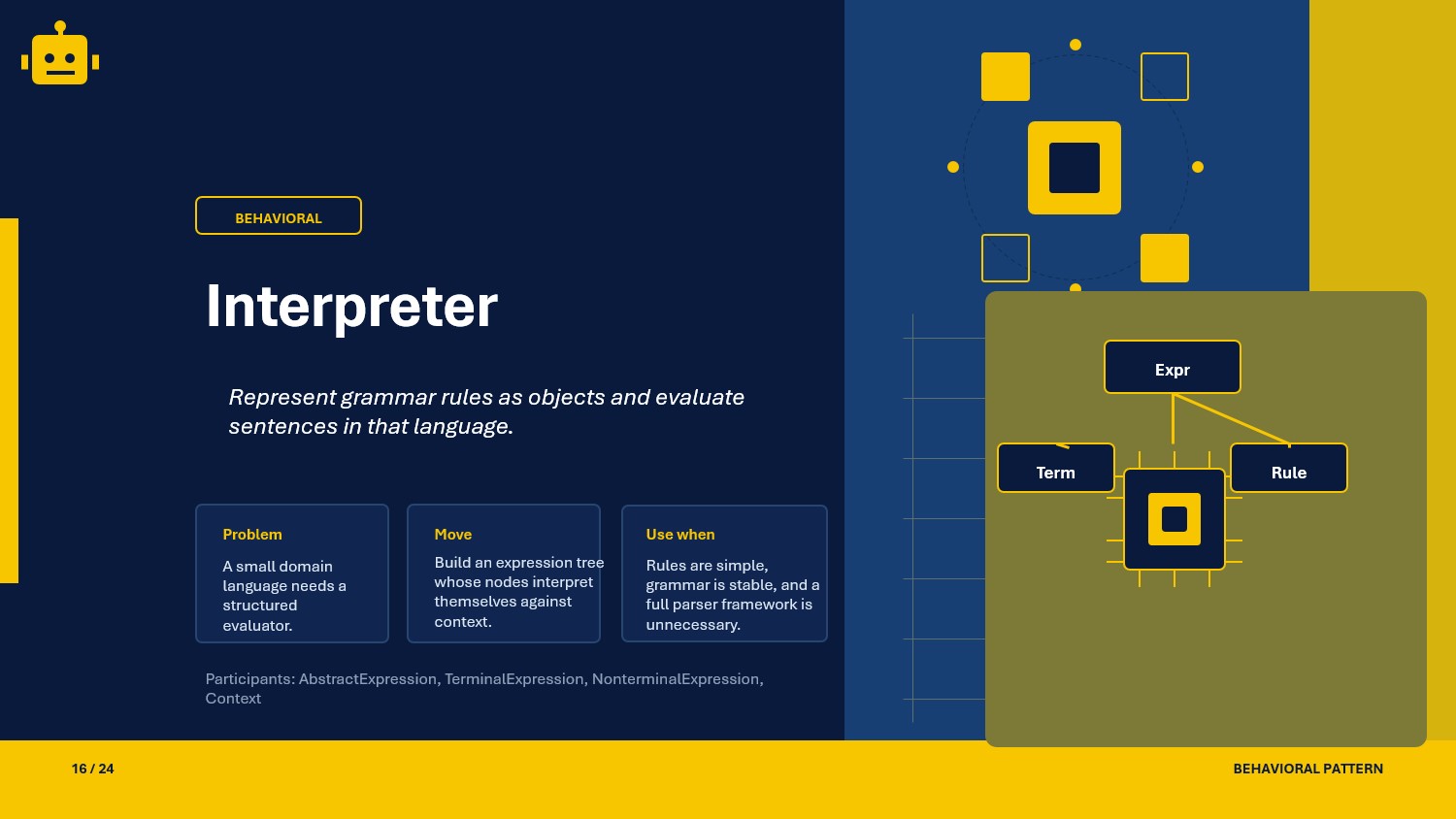
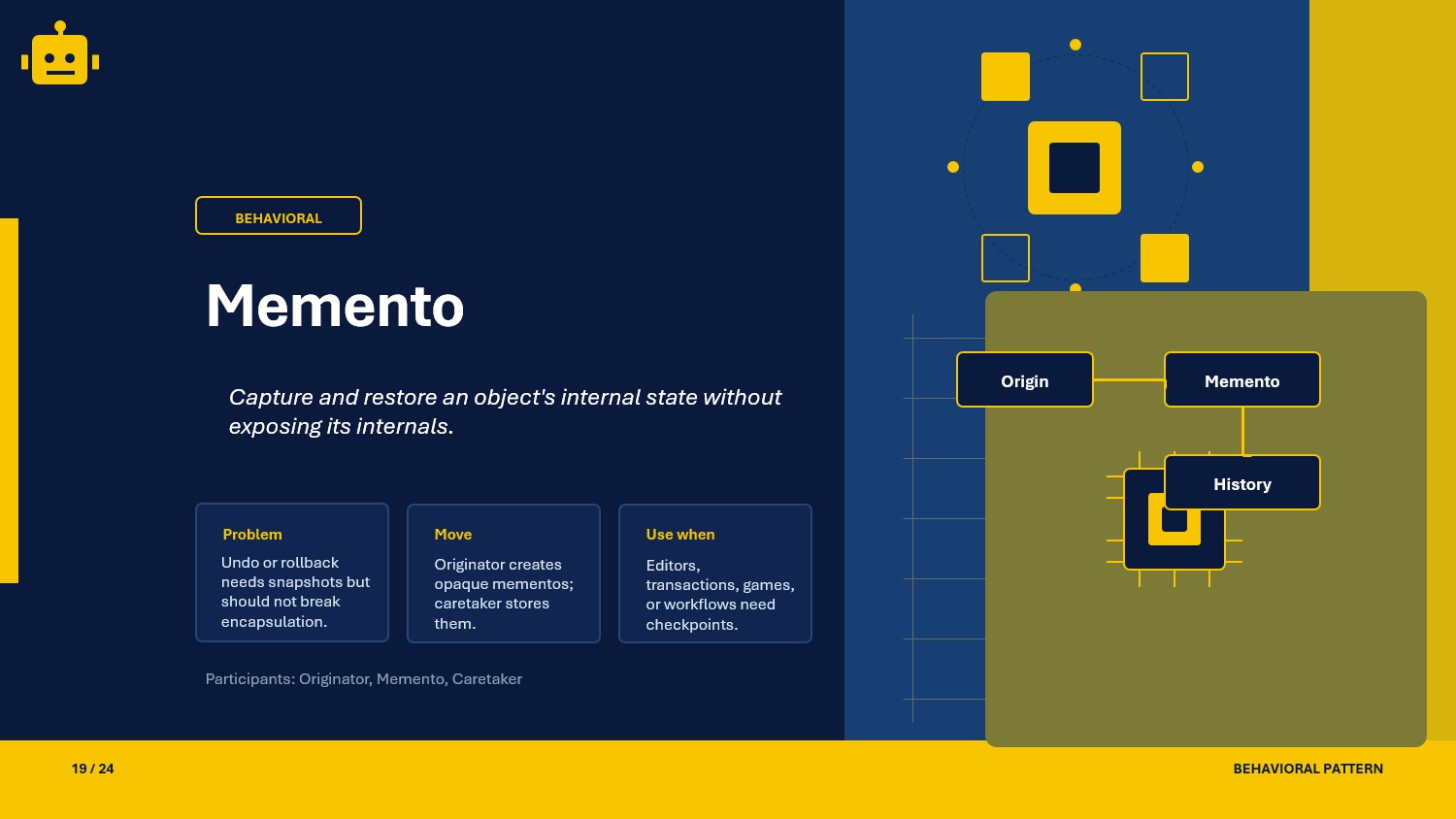
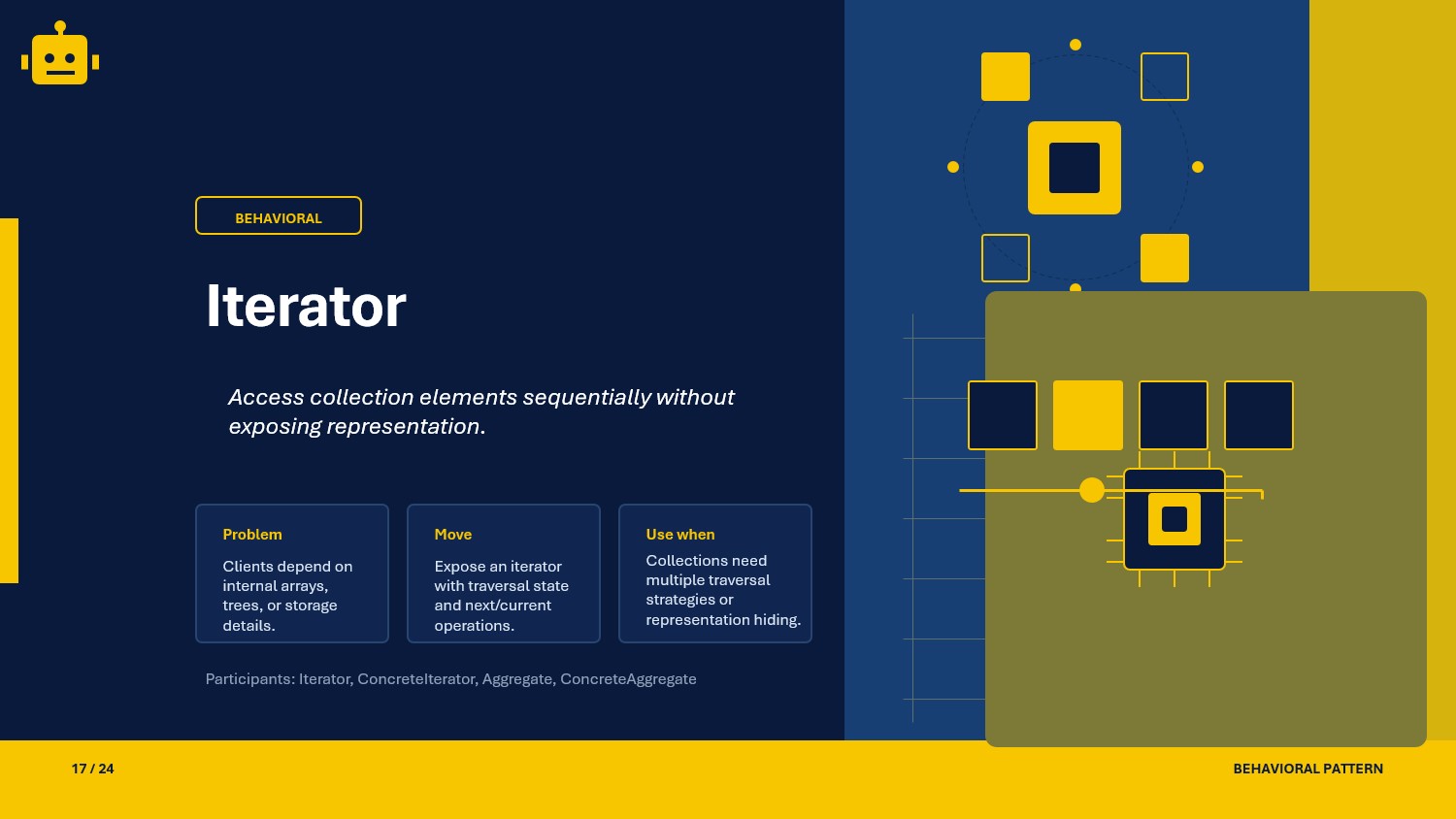
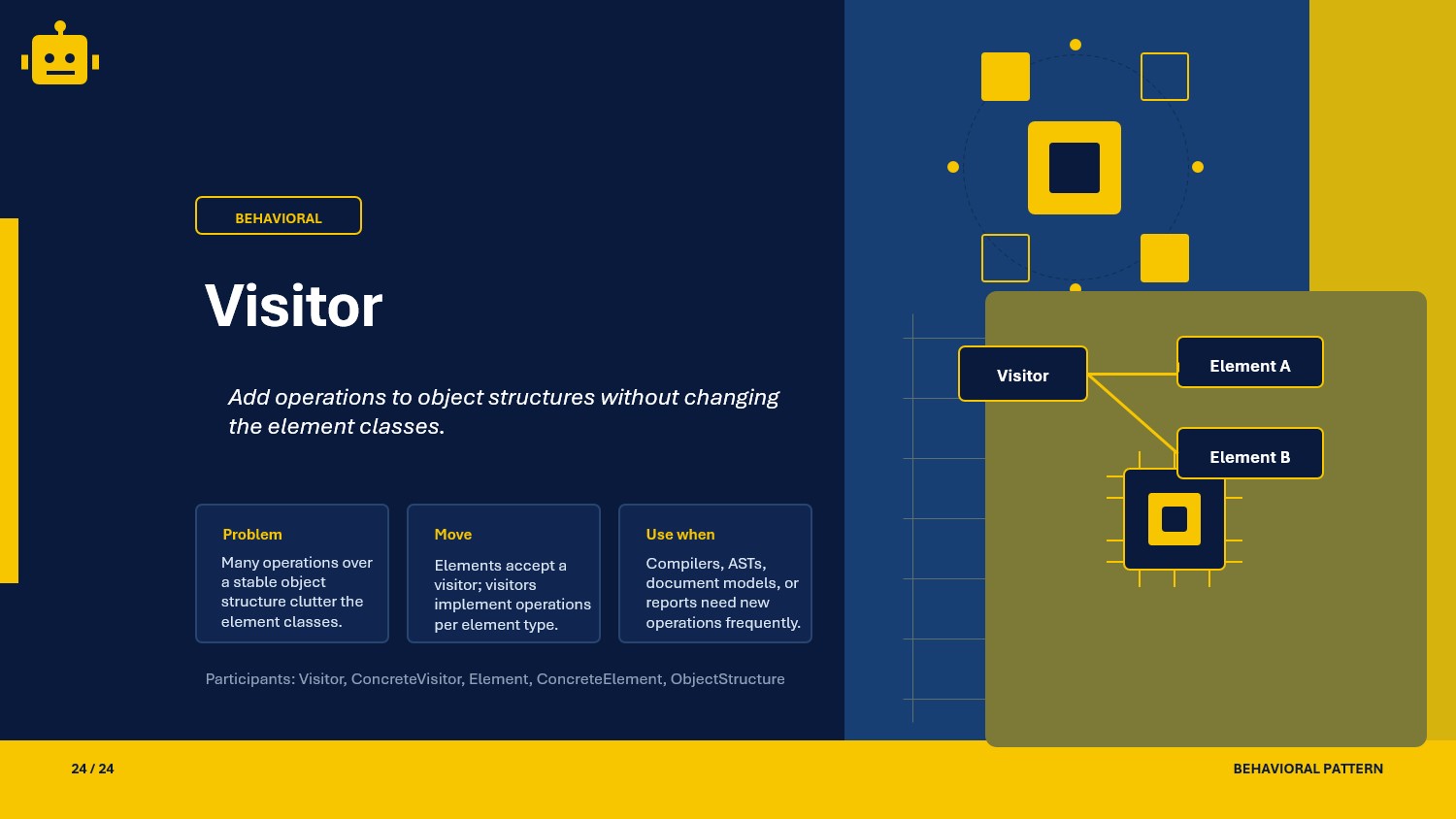
These patterns describe how objects communicate and share responsibilities. They are useful when you need interchangeable logic or coordinated workflows. Examples include Strategy, Command, Observer, Mediator, Chain of Responsibility, and State.
Singleton Pattern Example
The Singleton pattern is a creational pattern that ensures only one instance of a class exists across the application. It is often used for shared services such as logging, caching, or configuration access.
public sealed class AppLogger{    private static readonly Lazy<AppLogger> _instance =        new(() => new AppLogger());
    public static AppLogger Instance => _instance.Value;
    private AppLogger()    {    }
    public void Log(string message)    {        Console.WriteLine($"[{DateTime.UtcNow:O}] {message}");    }}
Why the Class Is Sealed
Marking the class as sealed prevents inheritance, which helps protect the single-instance behavior.
Why the Constructor Is Private
A private constructor stops other parts of the application from creating additional objects with normal instantiation.
How the Instance Is Shared
The static Instance property exposes the same object everywhere, and Lazy<T> helps initialize it safely.
ASP.NET Core Tip
In many APIs, using dependency injection with singleton lifetime is a cleaner option, such as builder.Services.AddSingleton<IAppLogger, AppLogger>();
Best Practices
Prefer Simplicity Over Overengineering
Patterns should make the codebase clearer, not more complicated. Use them only when they solve a genuine design problem.
Keep Controllers Thin
Controllers should delegate work to services and patterns-based components. Business logic should stay out of the controller layer.
Test Each Pattern Independently
Unit-test factories, strategies, and decorators separately. This gives you confidence that each piece behaves correctly without making the API layer too complex.
Refactor Gradually
Start with a simple implementation, then introduce a pattern only when the code starts becoming repetitive or difficult to change.